


Particle foams make a big difference in a lot of industries: from construction and packaging to automotive and consumer goods. At the same time, requirements for sustainability, resource efficiency, and CO₂ reduction are continuously increasing. Recycling particle foams helps reuse materials multiple times and reduce the environmental footprint of products.

Using Resources Wisely
Challenges in Recycling Particle Foams
Recycling particle foams poses specific technical and economic challenges:
-
Regulatory Frameworks
Laws and directives require higher recycling rates, increased use of recycled materials and measurable reductions in greenhouse gas emissions -
High Volume at Low Weight
The large amount of air enclosed in the foams makes transport and storage challenging. -
Material Purity as a Key Factor
In order for recycling to work well, foams must be collected separately according to type. Mixed sources or aging can impair quality.
-
Variable Material Properties
Different origins, aging and processing histories lead to varying material properties that complicate further processing. -
Contamination and Odor
Foreign materials or residues can impede recycling and require additional cleaning steps. -
Economic Viability
Elaborate sorting and cleaning processes often compete with cost efficient virgin materials.
Paths to Reuse
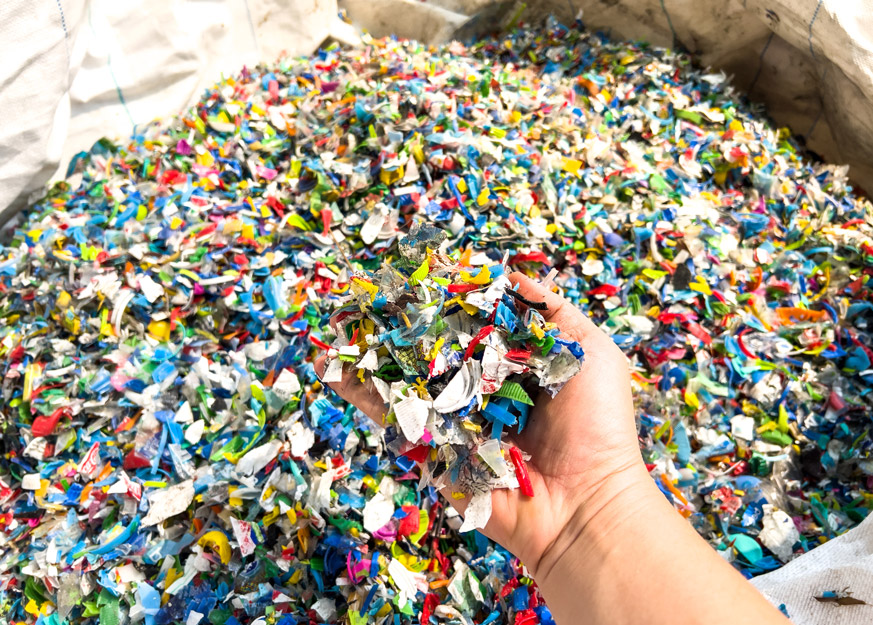
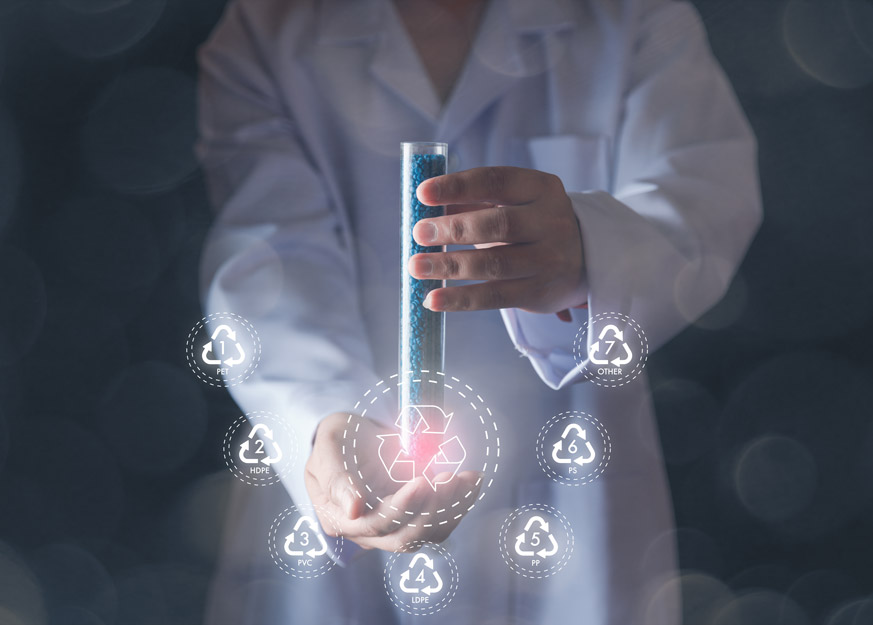
Recycling Technologies for Particle Foams

Innovations for Closed Loops
Future Perspectives in Recycling
The recycling scene for particle foams continues to evolve and will increasingly be influenced by technological innovations, new material concepts and more integrated value chains.
A central trend is the expansion of the available materials. Bio-based and biodegradable particle foams complement traditional materials. At the same time, materials designed from the outset for recyclability and circularity are gaining importance. Product design based on the principle of “design for recycling” already contributes to enabling high quality recyclate material flow.
In parallel, industry wide return and recycling systems are emerging, enabling structured collection, processing and reuse of particle foams. The goal is closed material cycles in which materials can be reused as often and with as little loss as possible.
Advances are also being made in manufacturing: energy efficient technologies such as steam free or energy optimised processes, as well as energy efficient tooling technologies, contribute significantly to reducing energy consumption and emissions.

Sustainable in Action
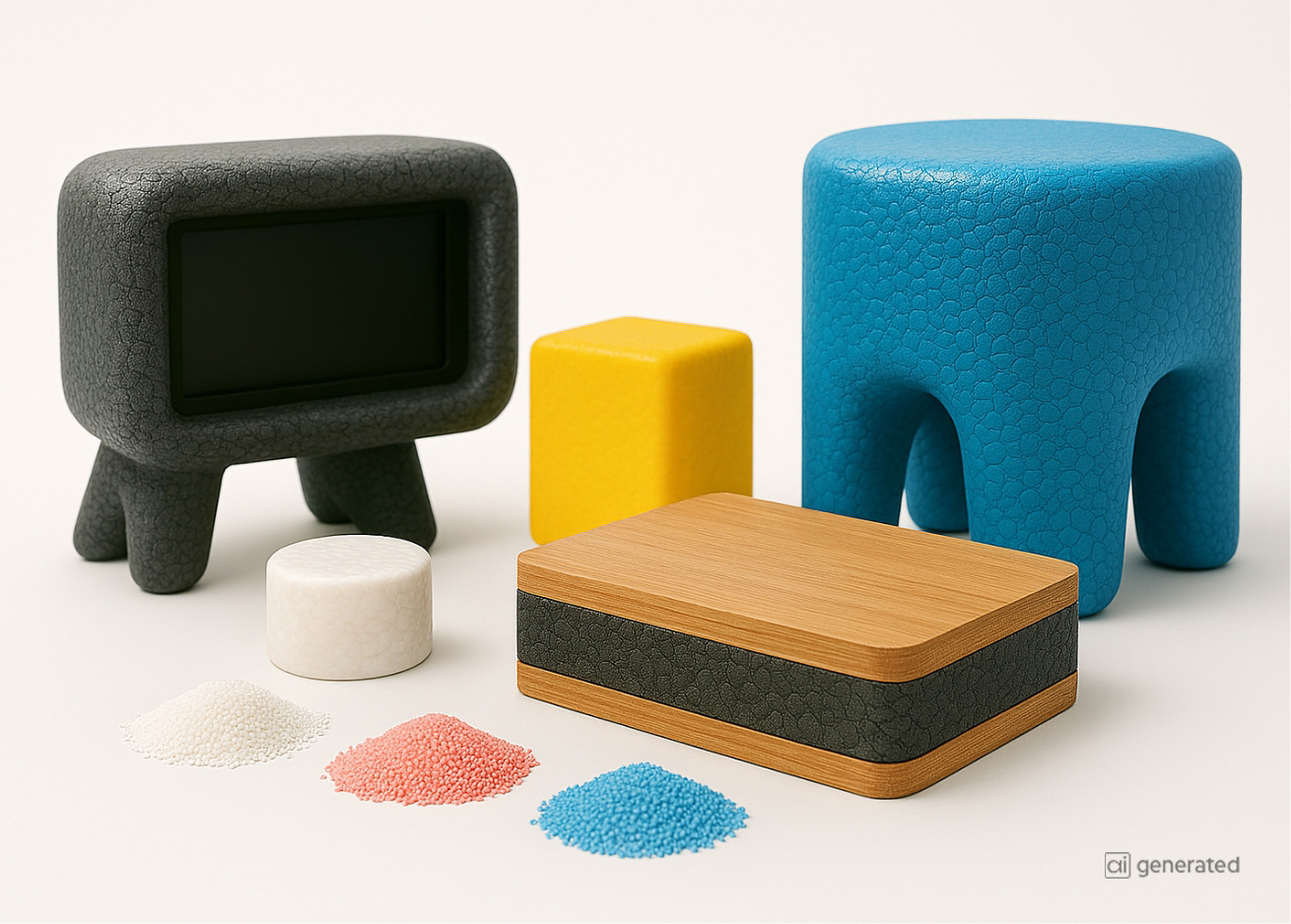
Particle Foams in Action
Particle foams are lightweight, robust and versatile: Properties that make them suitable for numerous applications, from lightweight components to protective packaging to technical moulded parts.
You need to load content from reCAPTCHA to submit the form. Please note that doing so will share data with third-party providers.
More InformationYou are currently viewing a placeholder content from Turnstile. To access the actual content, click the button below. Please note that doing so will share data with third-party providers.
More Information