


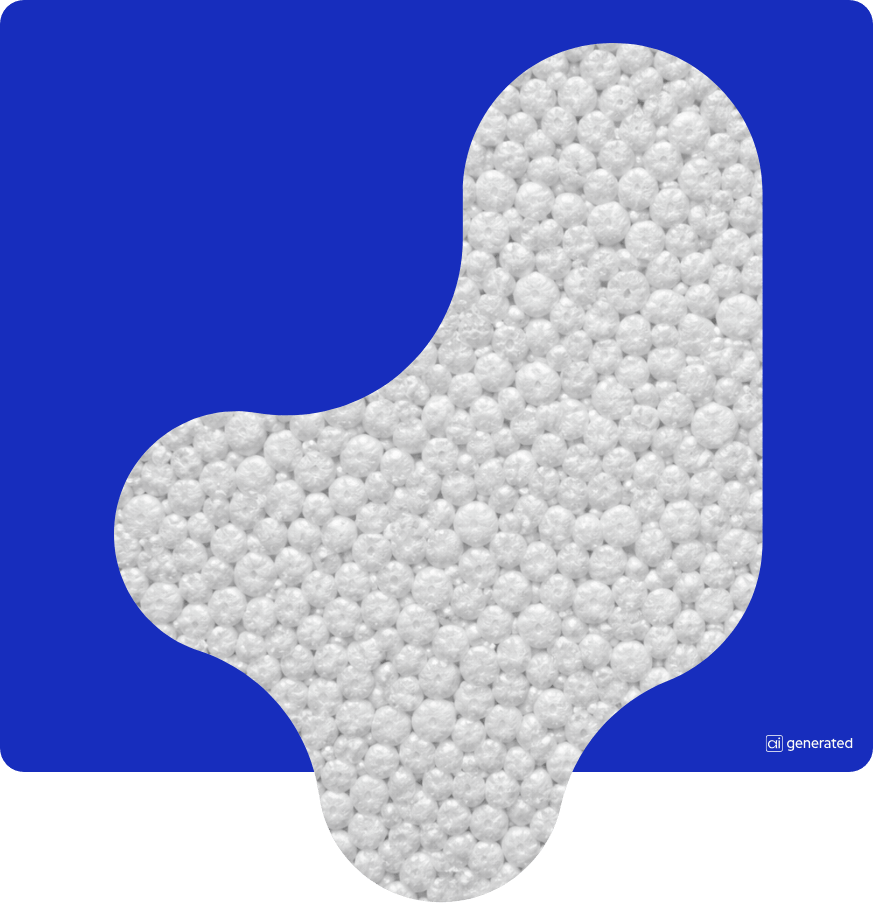
Particle foams consist of thermoplastic polymers that are expanded into foam beads with a closed‑cell structure using a blowing agent. These particle foam beads can consist of up to 98% air. The individual particles are fused together to create a dimensionally stable structure whose density can be adjusted over a wide range. This makes it possible to produce components with very low weight without sacrificing essential mechanical performance.
Particle foams are characterised by an exceptional interplay of physical and mechanical properties. Depending on the material type, they combine different characteristics in a unique way and thus offer a broad spectrum of material properties. This allows particle foams to be precisely tailored to requirements regarding density, stiffness, elasticity or thermal stability. There are also special grades with flame retardant, dissipative and conductive properties.

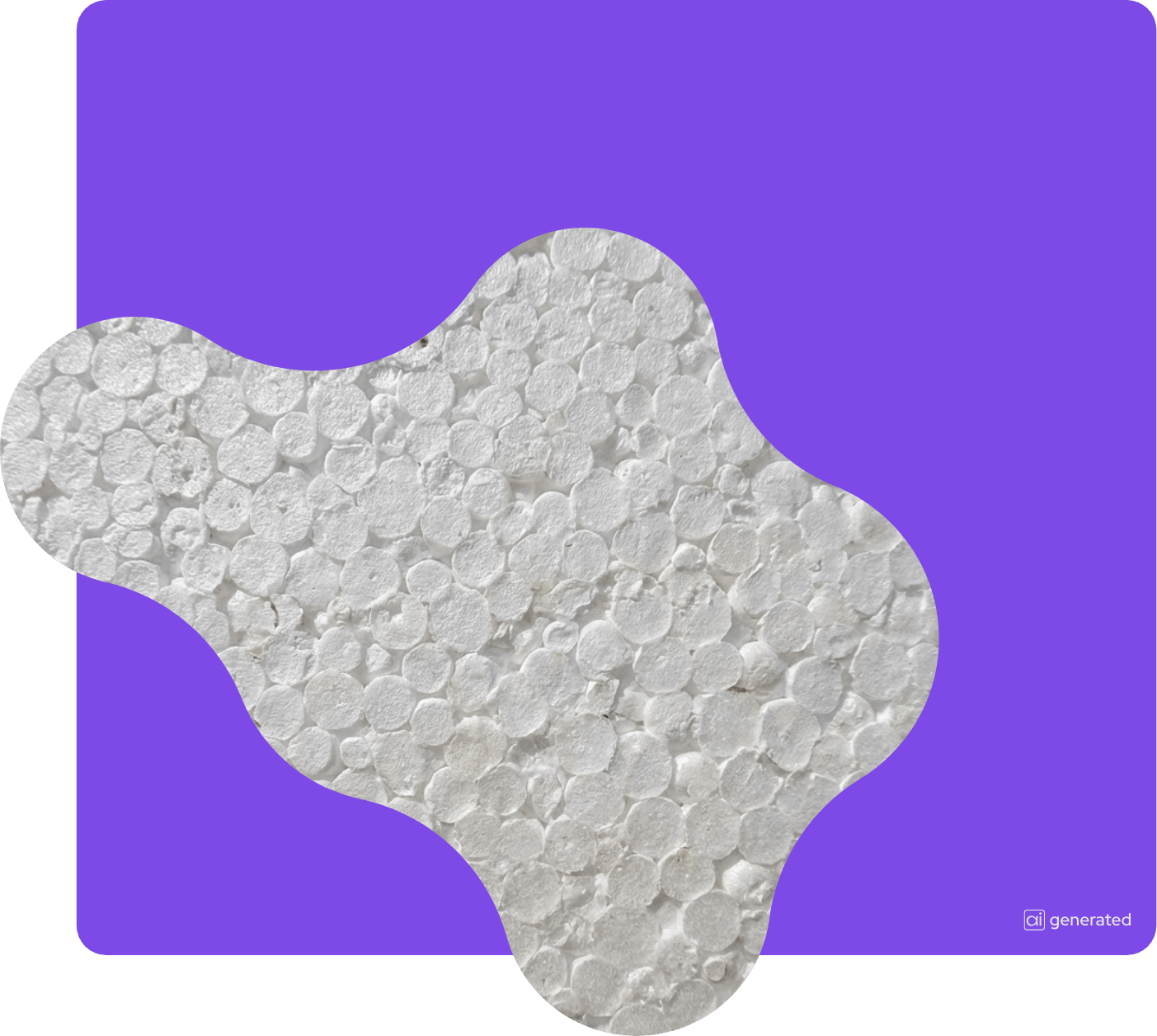
EPS—Expanded Polystyrene
EPS is the most widely used particle foam worldwide. It is transported in compact form as microgranules loaded with blowing agents. The expansion takes place during pre‑foaming on site, allowing the bulk density to be adjusted precisely. The closed‑cell foam consists of approximately 98% air, is extremely lightweight, highly insulating and ideal for one‑time impact loads.
Key Properties


Applications of EPS
Expanded polystyrene is primarily used in the construction industry for thermal insulation of walls, roofs and floors. In the packaging industry, it reliably protects electronics, medical products and food. Other application areas of EPS include model making, stage construction as well as leisure and safety products, for example helmets or swimming aids.
Properties of EPS
- Very good energy absorption, ideal for one‑time impact loads
- Brittle failure behavior and compressive deformation
- Long‑term temperature resistance up to approx. 70–80°C
- Very low thermal conductivity: 0.03–0.04 W/(m·K)
- Chemically resistant to water and many salts; sensitive to organic solvents
- Density range 10–40 g/L, but up to 200 g/L for applications requiring high stability
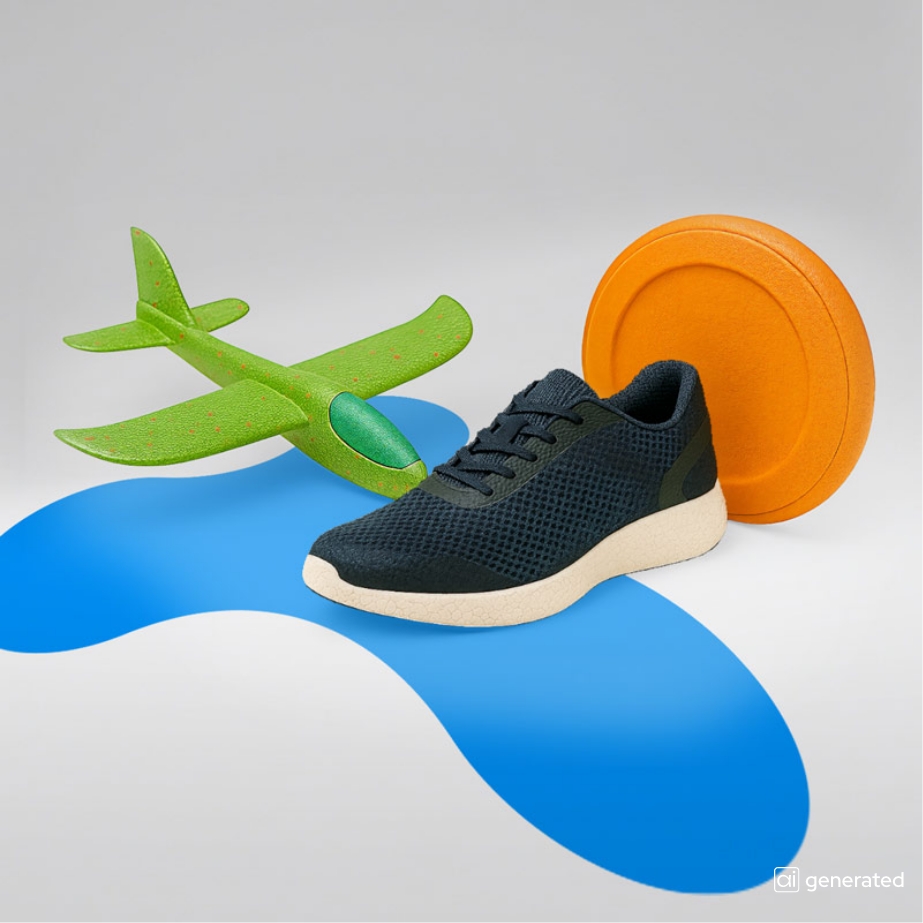
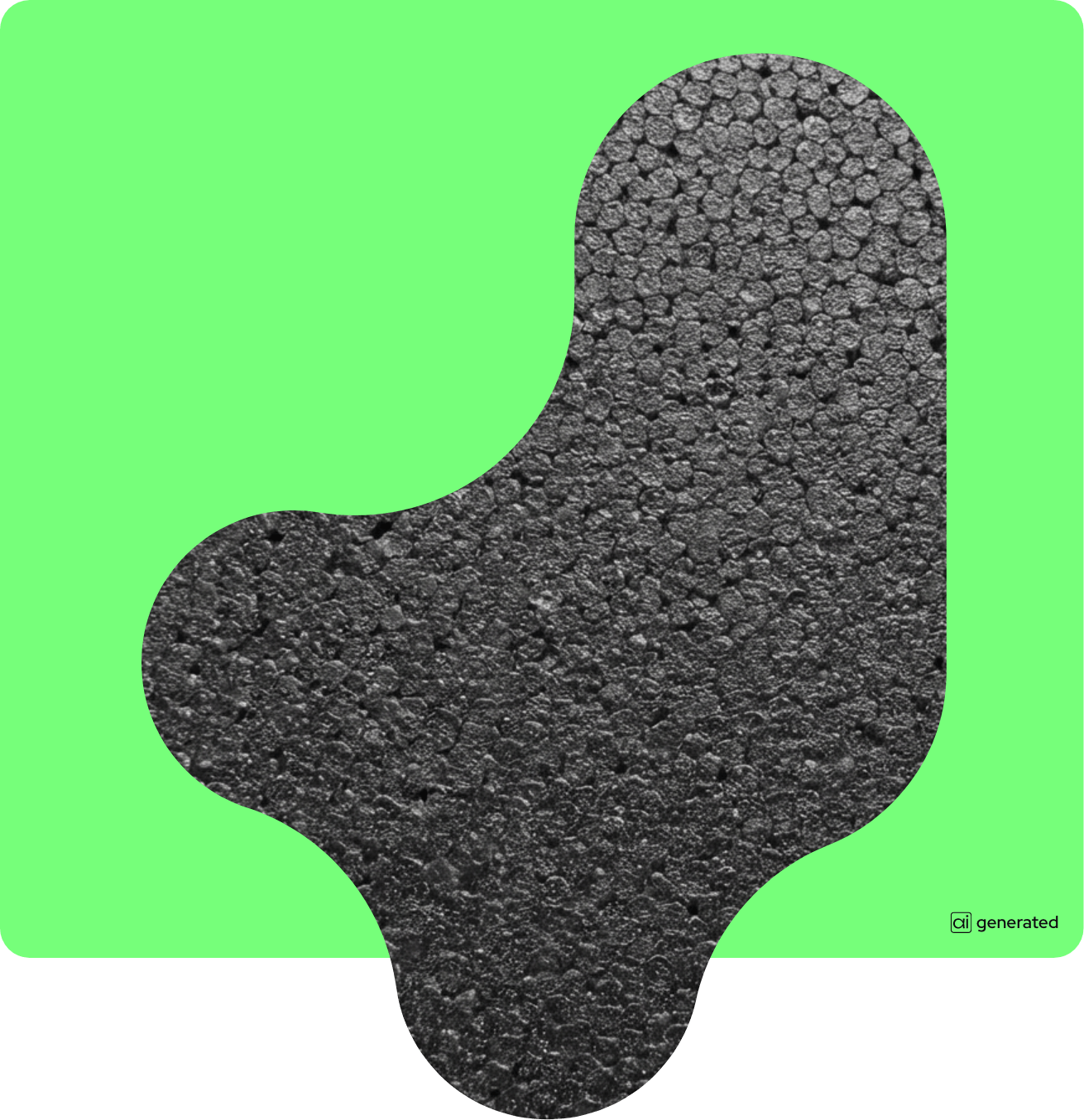
EPP – Expanded Polypropylene
EPP is a lightweight, yet highly durable particle foam made from semi‑crystalline polypropylene. EPP is a resilient, energy‑absorbing and dimensionally stable material—ideal for impact‑stressed components. Its excellent thermal insulation properties, combined with robustness, create an attractive combination of characteristics. In addition, EPP is available in a wide range of colours and, together with its exceptional design freedom, enables a wide variety of applications.
Key Properties


Applications of EPP
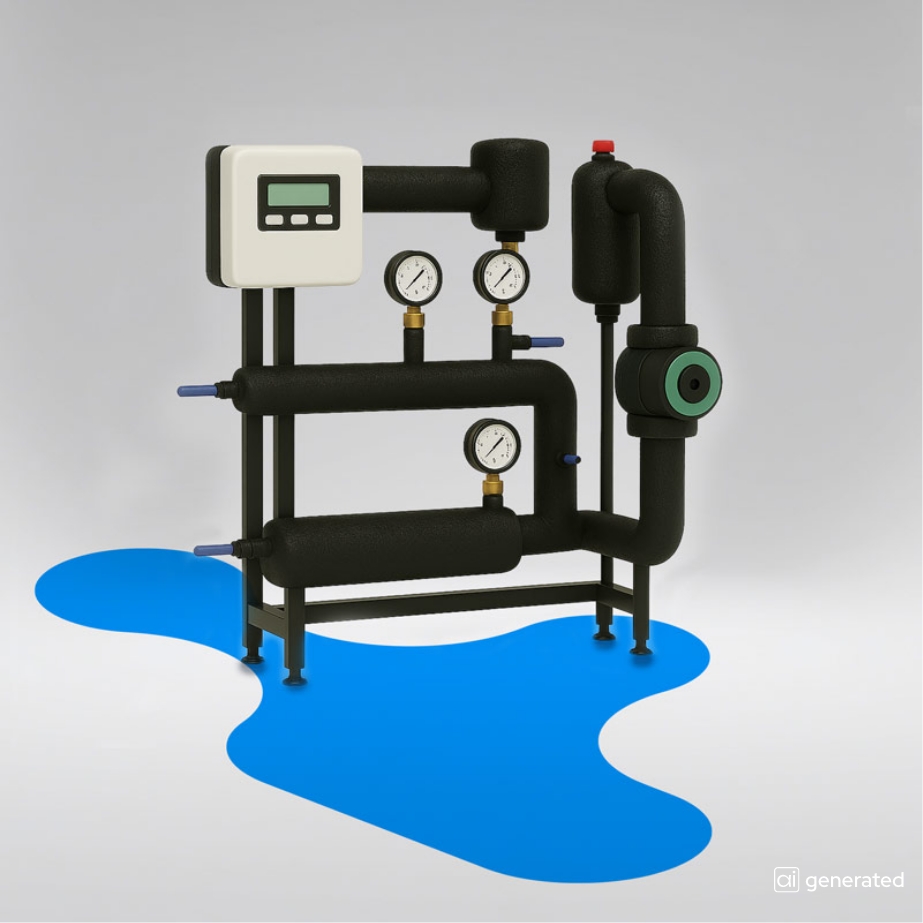
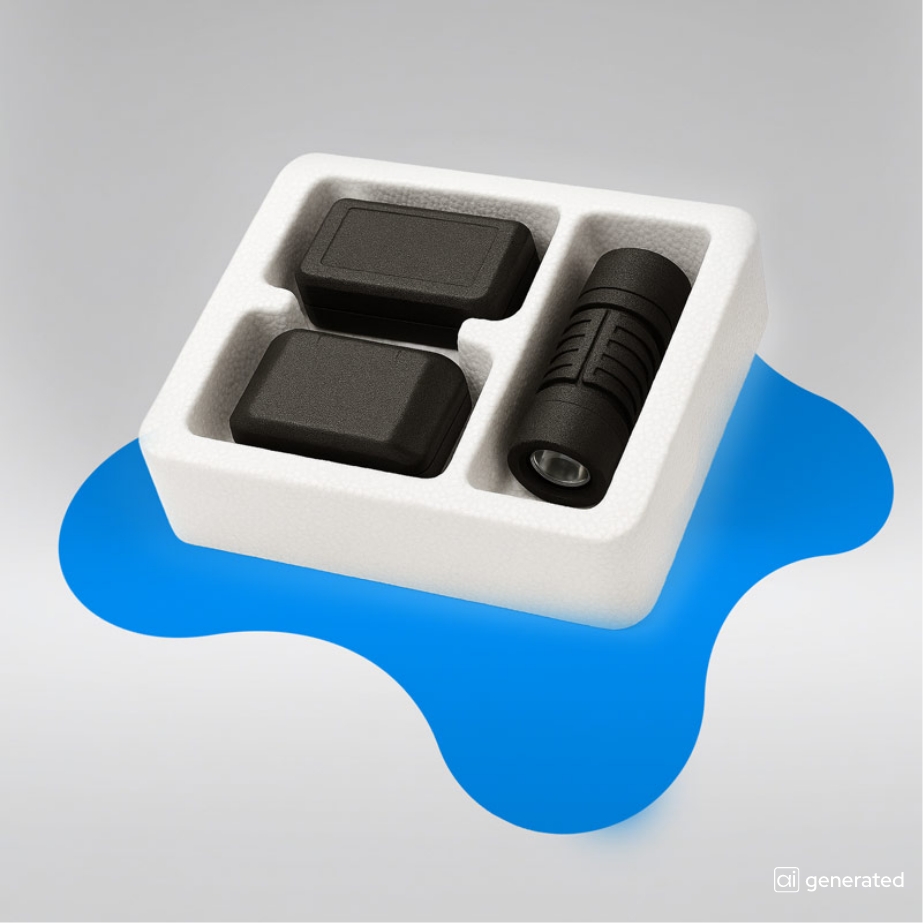
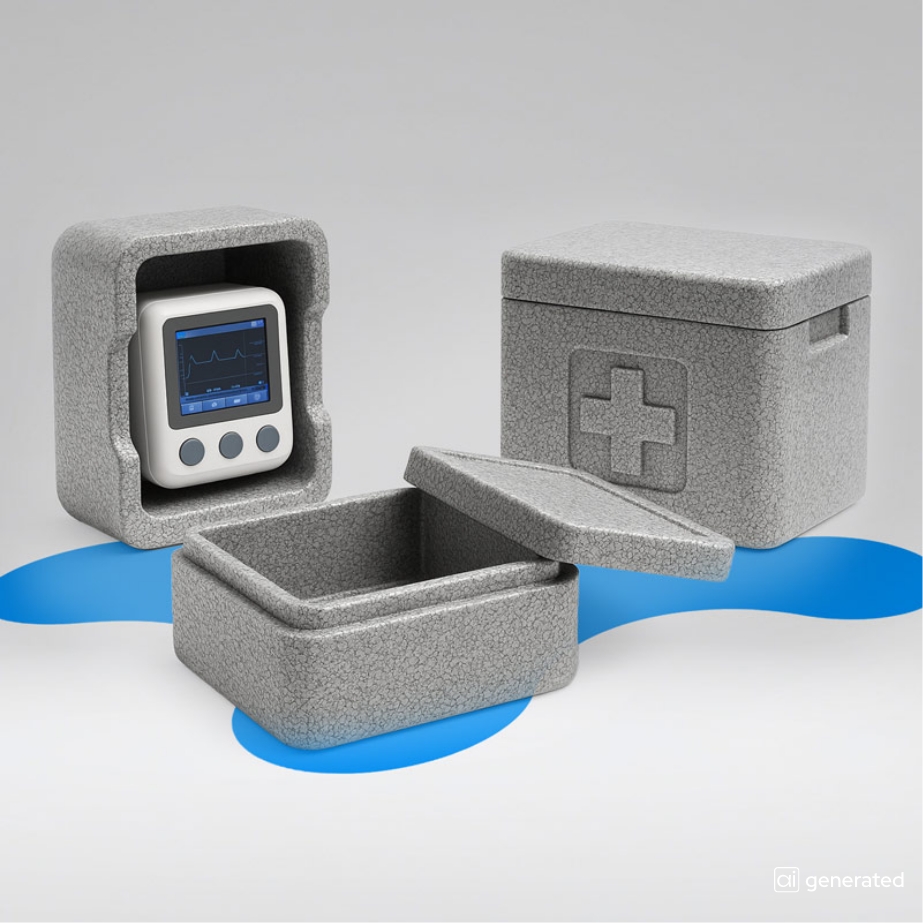
EPP is a widely used material: for impact absorbers, seats, headrests, side panels insulation, dunnage in the automotive industry, for impact absorbing and thermally insulating packaging, catering, HVAC and for helmets and protective gear in sports and leisure. The absence of harmful substances and its recyclability make expanded polypropylene suitable for food and toy applications as well.
Properties of EPP
- Energy absorption–resilient energy management material with dimensional stability
- Lightweight
- Structural strength
- Thermal Insulation–thermal conductivity approx. 0.04 W/(m·K)
- Acoustic Insulation–dampens, absorbs or blocks sound
- Chemically inert–unaffected by exposure to oils, fats, many solvents and diluted acids/alkalis
- Grades with flame retardant, dissipative and conductive properties available
- Density range 15–200 g/L
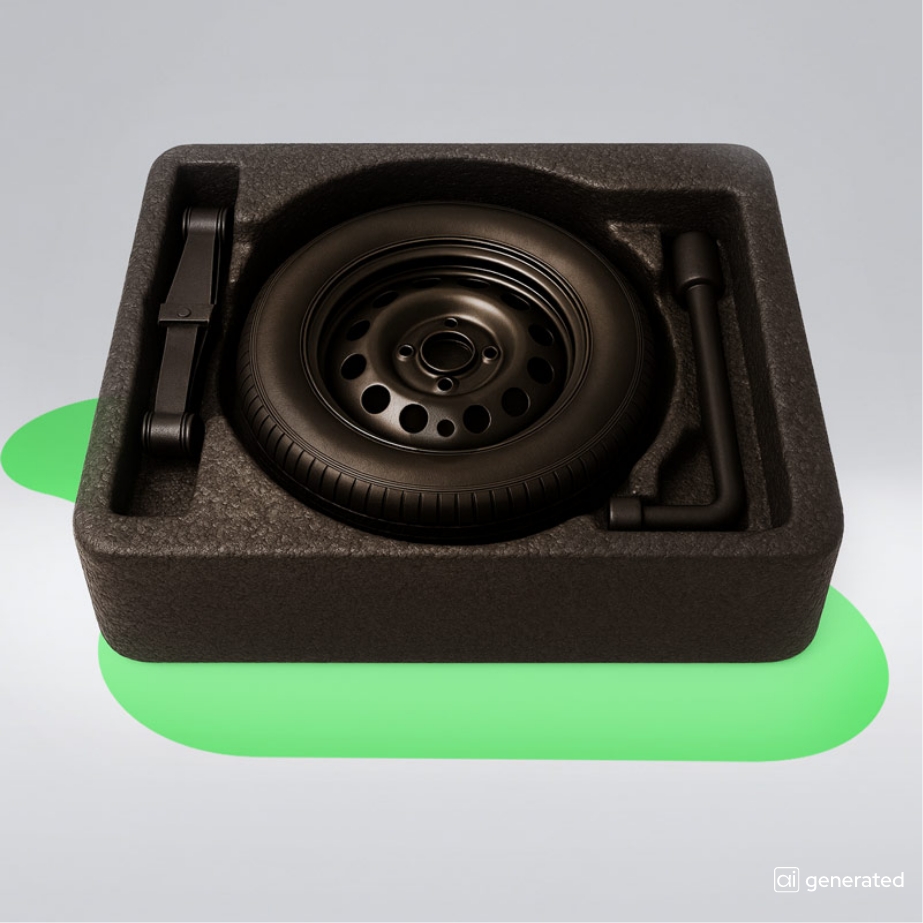
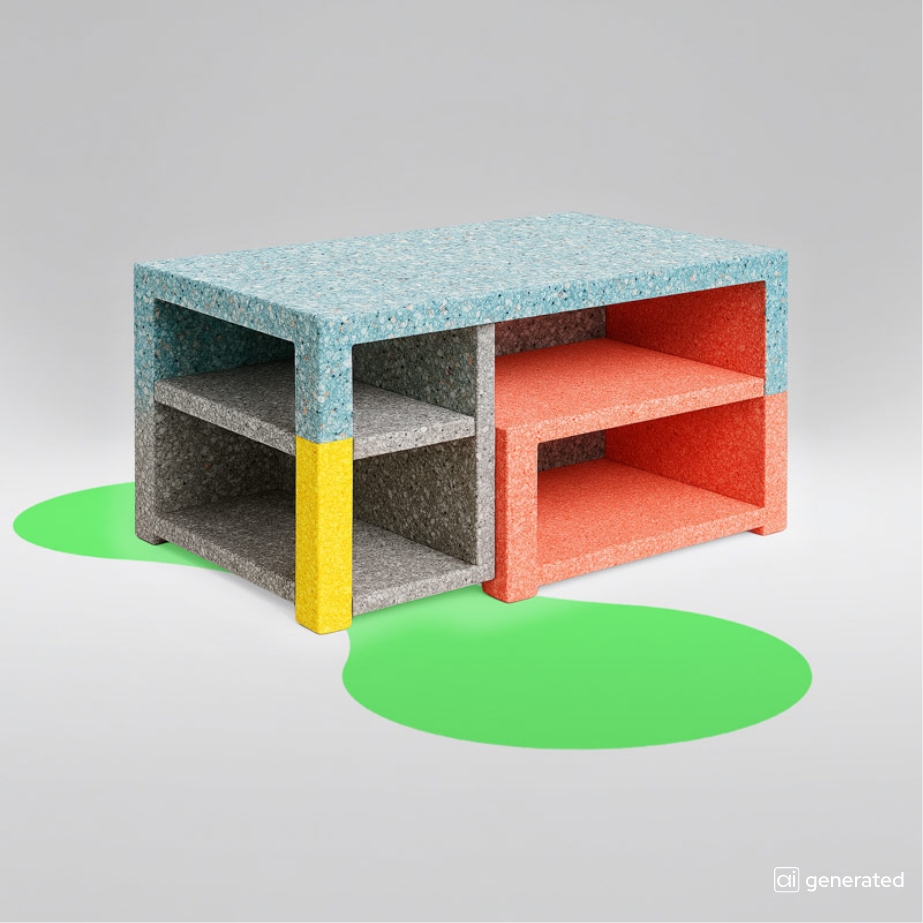
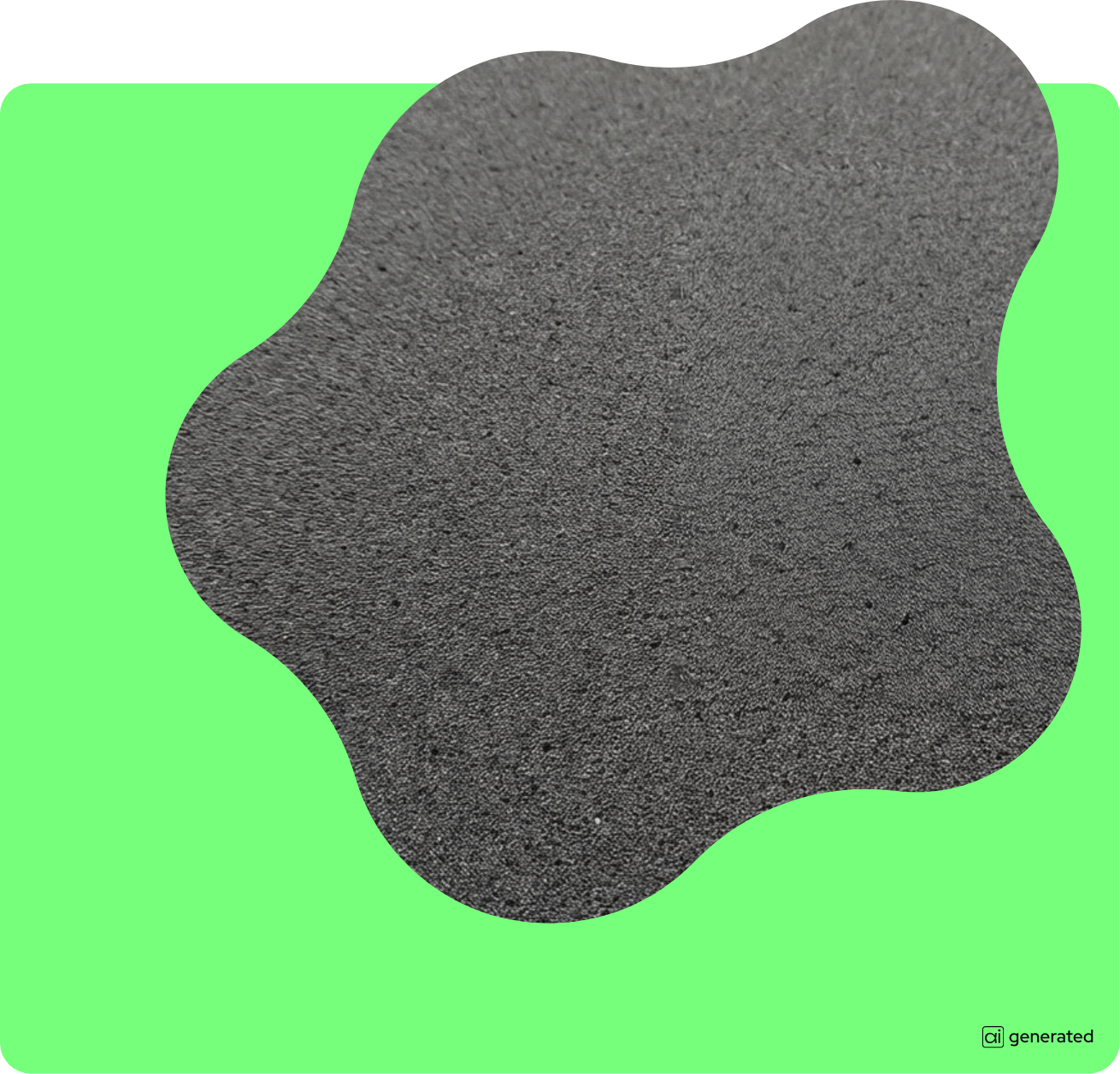
EPE—Expanded Polyethylene
EPE is a lightweight, flexible and impact‑absorbing particle foam based on polyethylene. Even at low temperatures, it exhibits high flexibility, toughness and impact resistance. EPE components remain dimensionally stable after processing and show minimal shrinkage, making the material ideal for precisely fitting parts. EPE combines excellent shock absorption, viscoelastic behaviour and high flexibility across wide temperature ranges.
Key Properties


Applications of EPE
Expanded polyethylene is primarily used in packaging for protective inserts, padding, and shipping materials, as it reliably absorbs shocks and its soft surface protects even highly sensitive items during transport. EPE is also found in sports and leisure products as well as technical and industrial applications.
Properties of EPE
- High elasticity, resilience and energy absorption
- High dimensional stability, minimal shrinkage
- Flexible even at very low temperatures (< -50°C)
- Heat‑resistant up to approx. 80°C
- Chemical resistant
- Can be moulded with EPS machines
- Typical density approx. 20–60 g/L
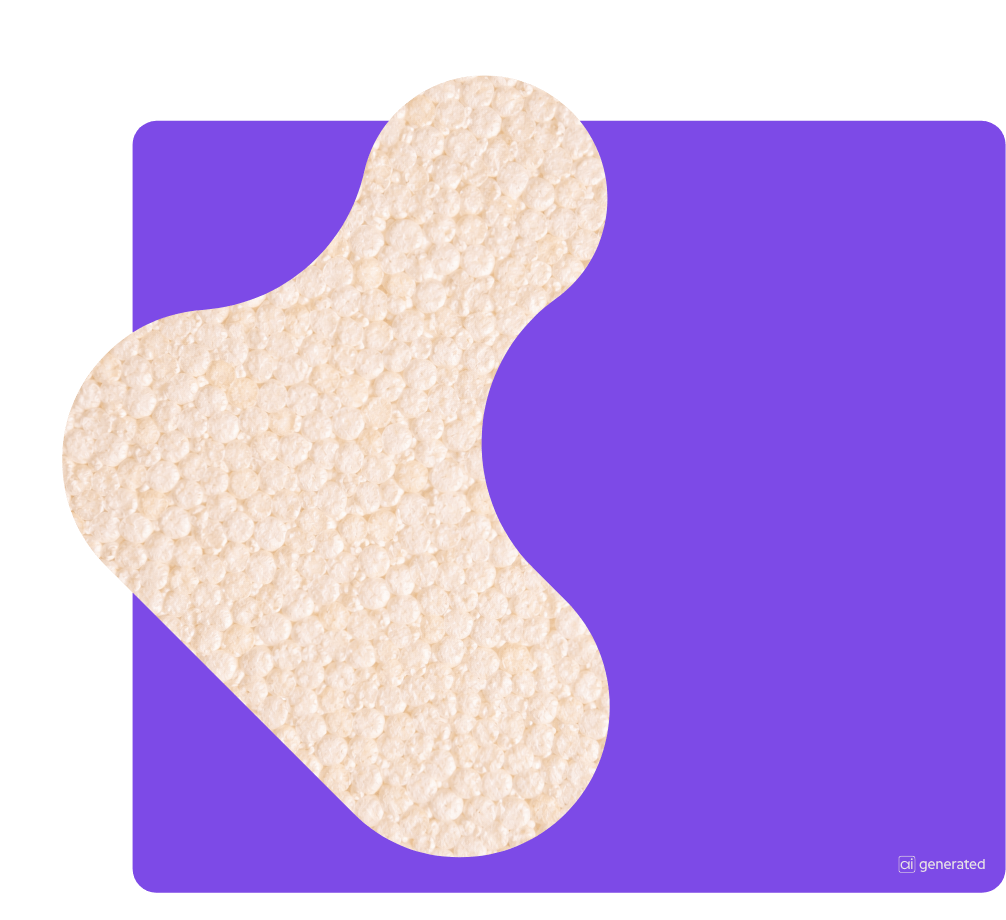
EPS/PE—Hybrid Foam: Expanded Polystyrene and Polyethylene
The innovative hybrid particle foam based on polystyrene and polyethylene combines the stiffness and insulation performance of EPS with the elasticity, abrasion resistance and chemical resistance of EPE. The result is a lightweight, dimensionally stable and at the same time impact‑absorbing foam that is robust, dimensionally stable and versatile in use.
Key Properties
Applications of EPS/PE
EPS/PE is ideally suited for impact‑absorbing transport and protective packaging, technical moulded parts, reusable load carriers and components in the automotive sector. Thanks to its high elasticity, damping behavior and chemical resistance, EPS/PE reliably protects sensitive products and enables complex, dimensionally accurate designs with low weight.
Properties of EPS/PE
- Improved flexibility and abrasion resistance compared to EPS
- Excellent stiffness like EPS but less brittle
- High dimensional stability, low brittleness
- Thermal conductivity similar to EPS
- Heat‑resistant up to approx. 70°C
- Chemically resistant
- Typical density approx. 20–100 g/L
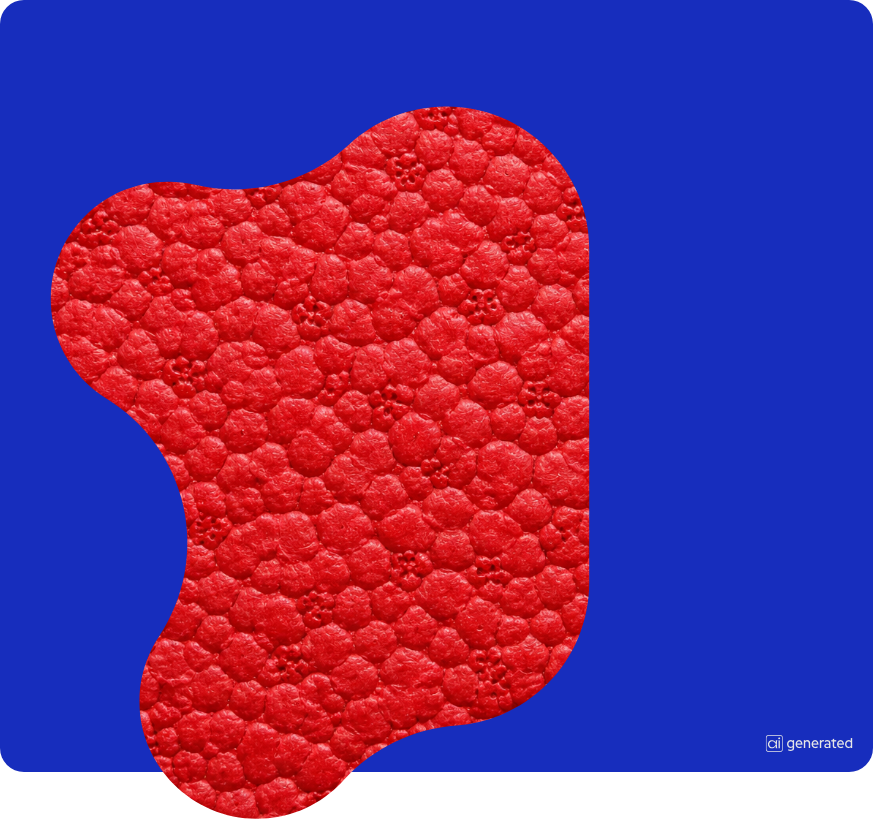
ETPU—Expanded Thermoplastic Polyurethane
ETPU is a particle foam based on thermoplastic polyurethane, known for exceptional elasticity, resilience, long‑term durability and abrasion resistance. The material combines effective shock absorption with high energy return and lasting dimensional stability. With a density of approx. 110–330 kg/m³, ETPU combines lightness with high mechanical performance. This makes ETPU ideal for applications requiring repeated cyclic dynamic loading while combining comfort, lightweight design, and performance.
Key Properties


Applications of ETPU
Expanded thermoplastic polyurethane is used wherever comfort, elasticity and robustness are essential. In sports and leisure, it is used in running shoes, bike saddles and protective equipment. In the automotive industry, ETPU dampens vibrations and noise and performs well in technical applications such as seals, buffers or shock absorbers. In furniture design, it is used in ergonomic seating and suspension systems.
Properties of ETPU
- Extremely high elasticity, resilience and energy return (“rebound effect”)
- High abrasion resistance, long‑term and fatigue‑resistant: mechanical properties remain stable over many cycles
- Resistant to many oils and chemicals
- Temperature‑stable approx. –20°C to +80–100°C
- Density range 110–330 g/L
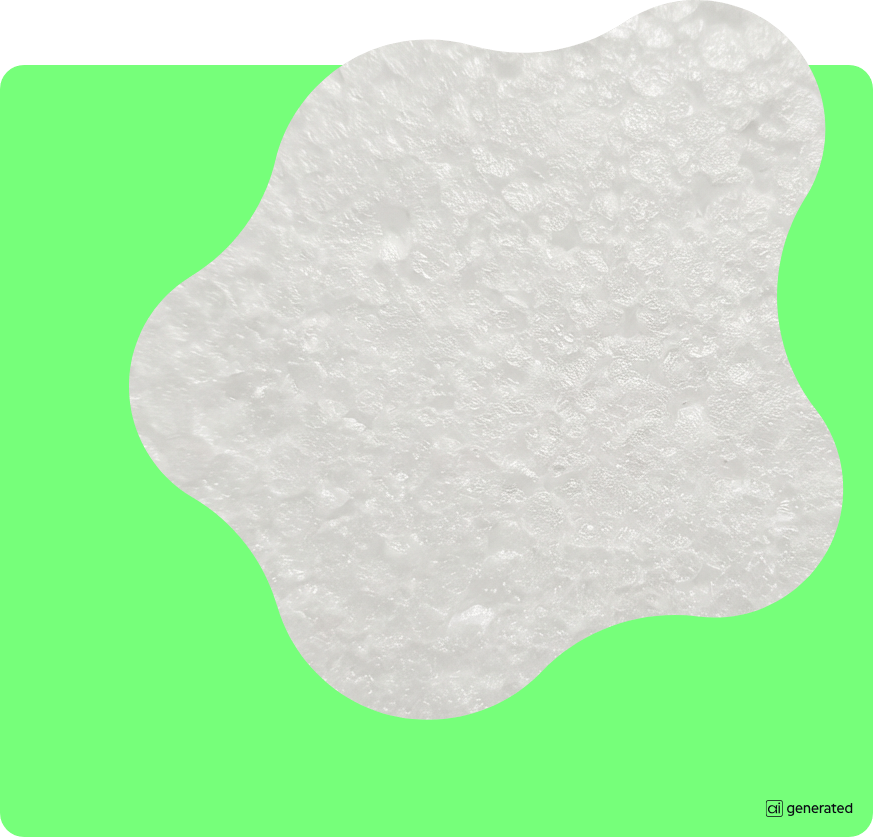
ETPE—Expanded Thermoplastic Elastomers
In addition to ETPU, there are other particle foams based on thermoplastic elastomers (TPE). They combine a rubber‑like flexibility with the advantages of expanded particle foams and are characterised by high elasticity, very good resilience and an exceptional dynamic energy absorption and return. The responsive and comfortable material shows only minimal permanent deformation after repeated compression (compression set typically ≤ 5 %). With their adjustable densities and the ability to replicate complex geometries, ETPE particle foams are suitable for demanding applications in which flexibility, durability and lightweight construction must be combined.
Key Properties

Applications of ETPE
ETPEs are used in sports and leisure products, ergonomic seating systems, as well as in automotive comfort and damping elements. Due to their elastic structure and high energy return, they are ideally suited for comfortable, lightweight and dynamically resilient product solutions.
Properties of ETPE
- Extremely high elasticity, resilience and energy return (“rebound effect”)
- High abrasion resistance, long‑term and fatigue‑resistant: mechanical properties remain stable over many cycles
- Resistant to many oils and chemicals
- Small bead sizes available
- Temperature‑stable from approx. –30 °C to +80 °C
- Density range 100–200 g/L
EmPPE—Expanded m‑polyphenylene ether
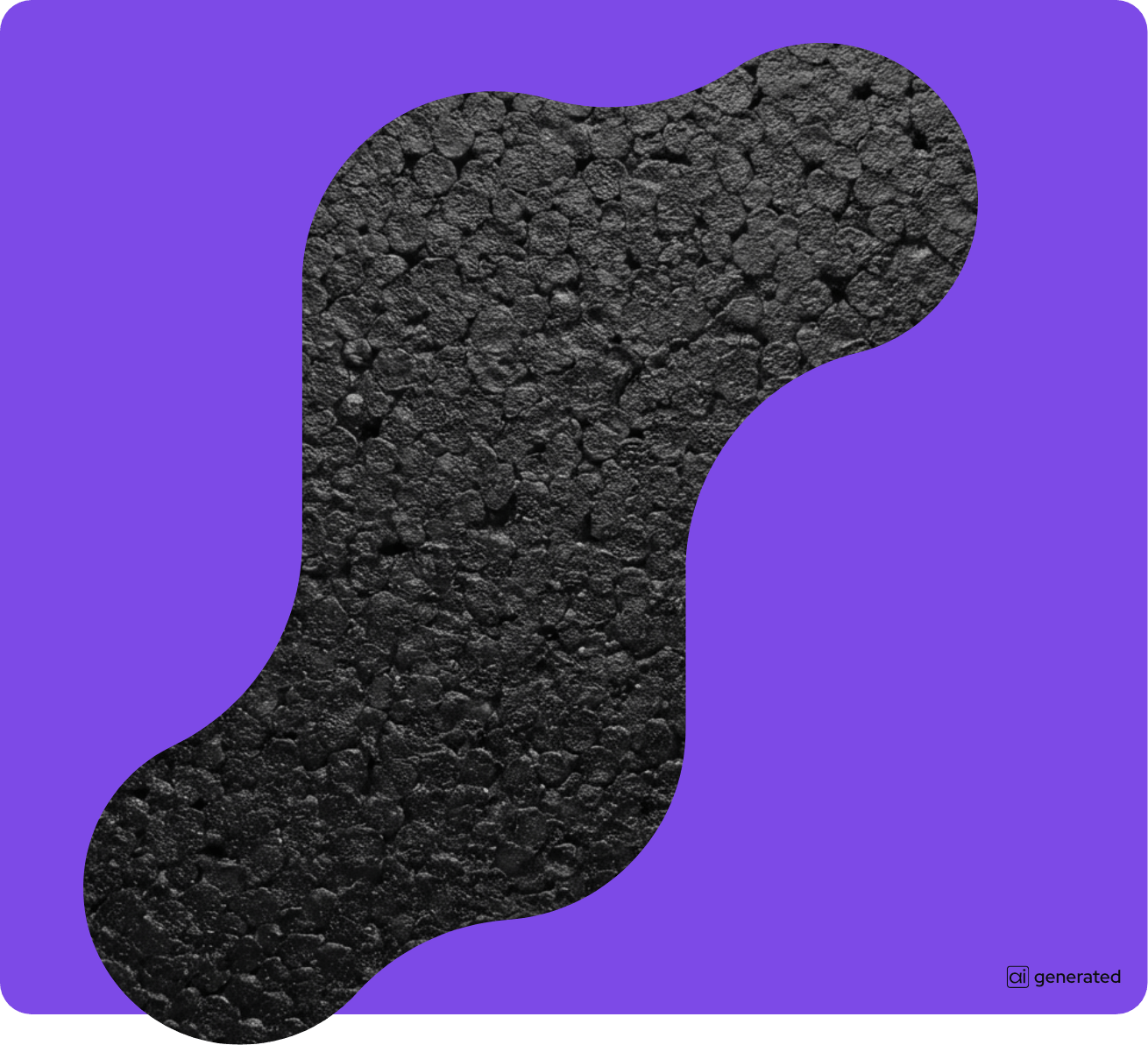
EmPPE is an innovative, extremely high‑performance particle foam based on modified polyphenylene ether (m‑PPE). The material combines high temperature resistance, excellent thermal insulation, flame protection at the highest level (UL94 V‑0) as well as a very low weight. Due to its thin‑wall mouldability and dimensional accuracy, EmPPE is ideally suited for electronic components, high‑temperature applications and safety‑critical components. Particularly noteworthy is the self‑extinguishing behaviour without halogenated flame retardants as well as the exceptional chemical resistance, even against aggressive substances such as acids and solvents. This gives EmPPE a combination of properties that goes far beyond classic particle foams.
Key Properties

Applications of EmPPE
EmPPE is used in electronics, automotive engineering and mobility applications where fire protection, low weight and precise shaping are essential. The material is suitable for battery housings, heat‑resistant components, insulating structures and complex functional parts, especially where high temperature resistance and chemical resistance are required.
Properties of EmPPE
- Thin‑walled, precise moulding possible
- Self‑extinguishing (UL94 V‑0)
- Temperature‑resistant up to +120 °C
- Thermal conductivity of approx. 0.034 W/(m·K)
- Very high chemical resistance
- Density range 50–150 g/L
EPA—Expanded Polyamide
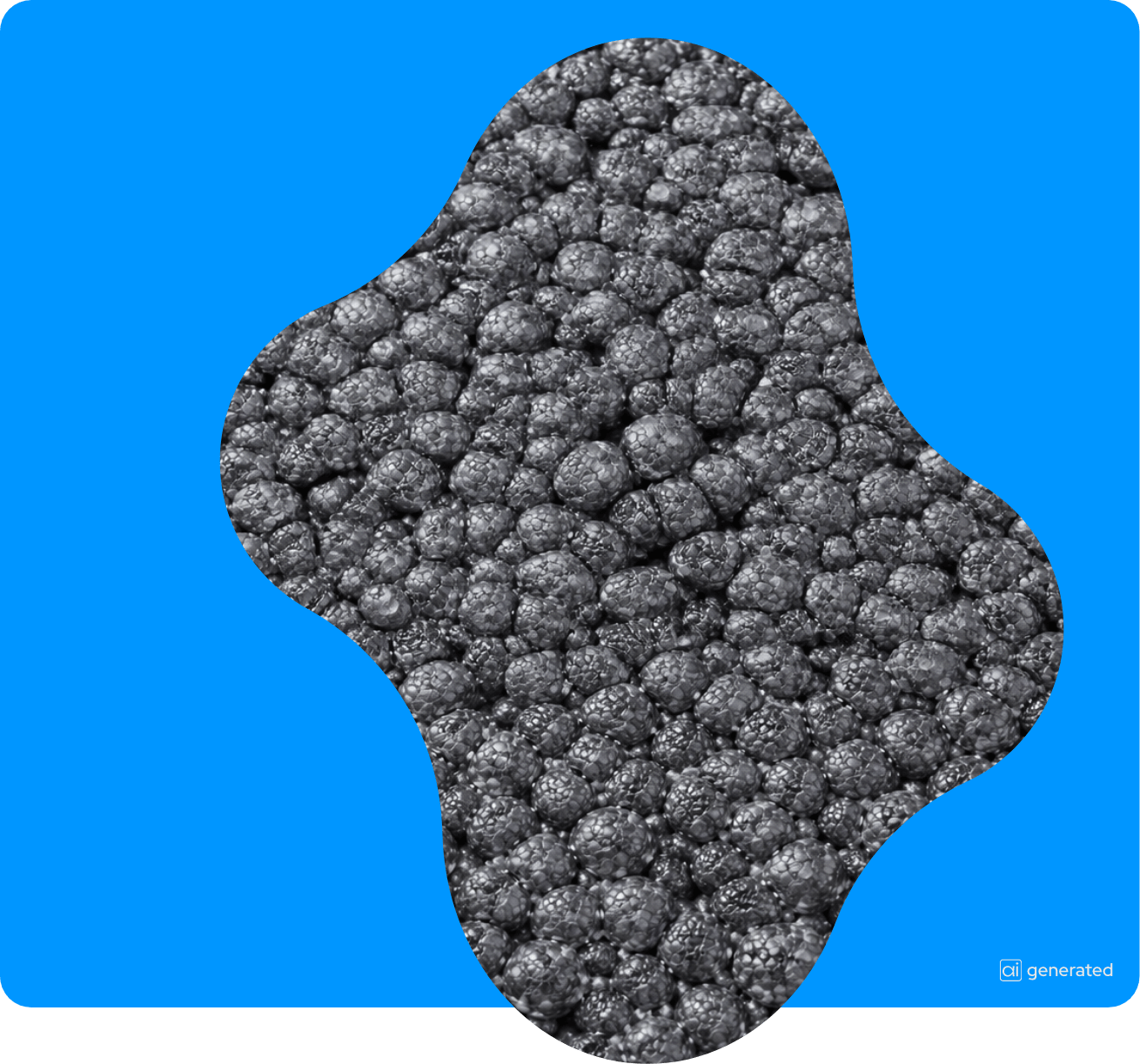
EPA—expanded polyamide—is a high‑performance particle foam based on polyamide that combines the superior mechanical and thermal properties of polyamide with the advantages of a lightweight, foamed structure. EPA is especially stiff, pressure‑resistant and temperature‑stable and it remains dimensionally stable even under high mechanical loads.
As a result of these material characteristics, EPA is particularly suitable for demanding mechanical and thermal applications and represents one of the most powerful commercially available particle foam classes. EPA complements traditional EPP or EPS components precisely where those materials reach their limits. With densities of approx. 150–600 g/L, it combines mechanical and thermal robustness with low weight. As a thermoplastic particle foam, EPA is recyclable and compatible with existing EPP processing technologies.
Key Properties
Applications of EPA
EPA is primarily used in the automotive industry, including engine bay components, crash structures, energy absorbers, load‑bearing interior parts, and door and interior cladding. In the field of electromobility, EPA is used in battery modules and housings, for thermal insulation, and in structurally integrated lightweight components. Additional applications can be found in sports and leisure products such as ski, snowboard or skateboard cores and protective gear. In industrial settings, EPA is used for technical moulded parts in demanding mechanical and thermal environments, high‑temperature insulation and various damping or shock‑absorbing systems.
Properties of EPA
- Very high stiffness, pressure resistance and impact strength
- Excellent temperature resistance: continuous use up to approx. 150°C, short‑term up to approx. 210°C
- Thermoform‑stable: retains shape and dimensional accuracy under load and temperature fluctuation
- High chemical resistance, especially to oils, fuels and lubricants
- Density range 150–600 g/L
EPET—Expanded Polyethylene Terephthalate
EPET is a modern high‑performance particle foam developed specifically for applications that require materials to withstand challenging conditions. With its combination of temperature resistance, structural stability and low weight, EPET opens up new possibilities in technical lightweight construction. Particularly in industries where high thermal loads, stringent safety requirements and efficient insulation come together, the material demonstrates its strengths. EPET is increasingly becoming an attractive alternative for demanding constructions in the mobility and energy sectors.
Key Properties

Applications of EPET
This high‑performance particle foam is especially suited for high‑temperature applications and offers excellent dimensional stability. As a particle foam or core material in the transport sector, EPET stands out due to its excellent heat resistance, flame retardancy and thermal insulation. In the automotive sector, EPET is used in areas close to the engine or battery. It is also found in aviation, shipbuilding and as a core material in wind turbine blades.
Properties of EPET
- Lightweight construction (up to 90% lighter compared with solid components)
- Very high temperature resistance (up to 180 °C)
- Very good fire performance (V‑2 under UL94 and FMVSS302 passed)
- Low thermal conductivity (0.040–0.059 W/(m·K))
- Can be processed using standard technologies for particle foams
- Density range 150 / 300 g/L
EPLA—Expanded Polylactide
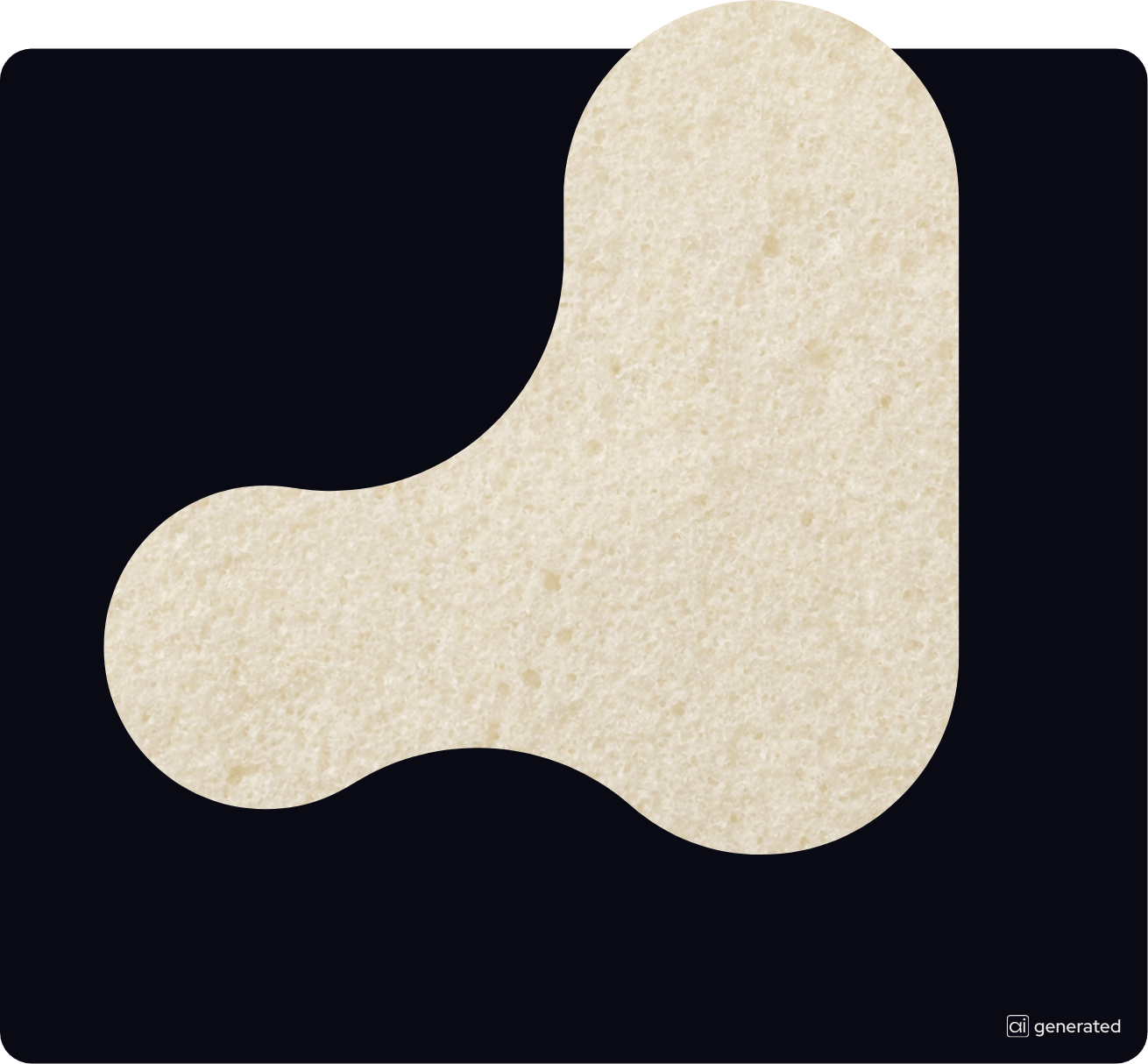
EPLA is a bio-based, industrial biodegradable particle foam made from polylactide (PLA), produced from renewable raw materials such as corn starch or sugarcane. It represents an environmentally friendly alternative to petroleum‑based foams like EPS and can functionally replace them in many applications. EPLA is manufactured as an expanded particle foam and processed using conventional moulding processes. A major advantage of EPLA lies in its ecological performance. Its CO₂ footprint is significantly lower than that of polystyrene (PS), offering a greatly reduced environmental impact while maintaining comparable functionality.
Key Properties

Applications of EPLA
Expanded polylactide is mainly used in the packaging industry—for example, in sustainable protective packaging for electronics, household appliances or cosmetics. It is also used in consumer goods as well as leisure, design and decorative applications as an ecological alternative to EPS, such as in model‑making or creative products. In the food sector, EPLA is used for trays, inserts and shock‑absorbing packaging that is compostable under industrial conditions. Due to comparable material and processing costs, EPLA is considered a promising replacement for EPS in high‑volume applications such as packaging.
Properties of EPLA
- Bio-based and biodegradable under industrial conditions
- Significantly reduced CO₂ footprint compared with polystyrene
- Mechanical properties comparable to EPS
- Thermal conductivity approx. 0.03–0.05 W/(m·K), comparable to EPS
- Continuous service temperature approx. 45–50 °C
- Sensitive to hydrolysis, alcohols and alkalis
- Typical density approx. 15–200 g/L
EPHBH—Expanded biobased PHBH-Particle Foam
EPHBH is a biobased, home- and marine compostable particle foam made from polyhydroxybutyrate-co-hydroxyhexanoate, produced through a microorganism fermentation process. It represents an environmentally friendly alternative to petroleum based foams, because it uses vegetable and waste vegetable oil to produce a polymer through the use of biological life. E-PHBH is manufactured as an expanded particle foam and processed using conventional moulding processes. A major advantage of EPHBH lies in its ecological performance. Its CO₂ footprint is significantly lower than that of polystyrene, offering a greatly reduced environmental impact while maintaining comparable functionality.
Key Properties
Applications of EPHBH
EPHBH is used in the packaging industry: for example, in sustainable protective packaging for electronics, household appliances or cosmetics. In the food sector, E-PHBH is used for trays, inserts and shock absorbing packaging.
Properties of EPHBH
- Biobased and home and marine compostable, degrading to CO₂ and water
- Microplastic free
- Food contact grades available
- Continuous service temperature approx. 80 °C
- Mechanical properties comparable to EPS
- Sensitive to hydrolysis, alcohols and alkalis
- Typical density approx. 35–60 /L
Particle Foam Properties
More Than Just Foam
Particle foams are characterised by low weight, high impact resistance and excellent insulation properties. Thanks to near‑net‑shape moulding, they offer great design freedom and precise adaptability. Depending on polymer type, particle structure and fusion level, additional properties such as temperature resistance, chemical resistance or specific surface qualities can be utilised. They are generally physiologically safe, environmentally friendly and recyclable, allowing material selection to be tailored to each application.


Material for the Future
Resource‑Efficient Solutions
In terms of sustainability, particle foams offer many advantages. Being thermoplastic, they are easy to mechanically recycle: for example, through shredding and reintegration into the manufacturing process. Their low weight contributes to reduced material use and energy consumption in many applications—from packaging to mobility. Current developments increasingly focus on enhanced recyclability and the use of bio-based polymers.
Applications
Made for Every Challenge
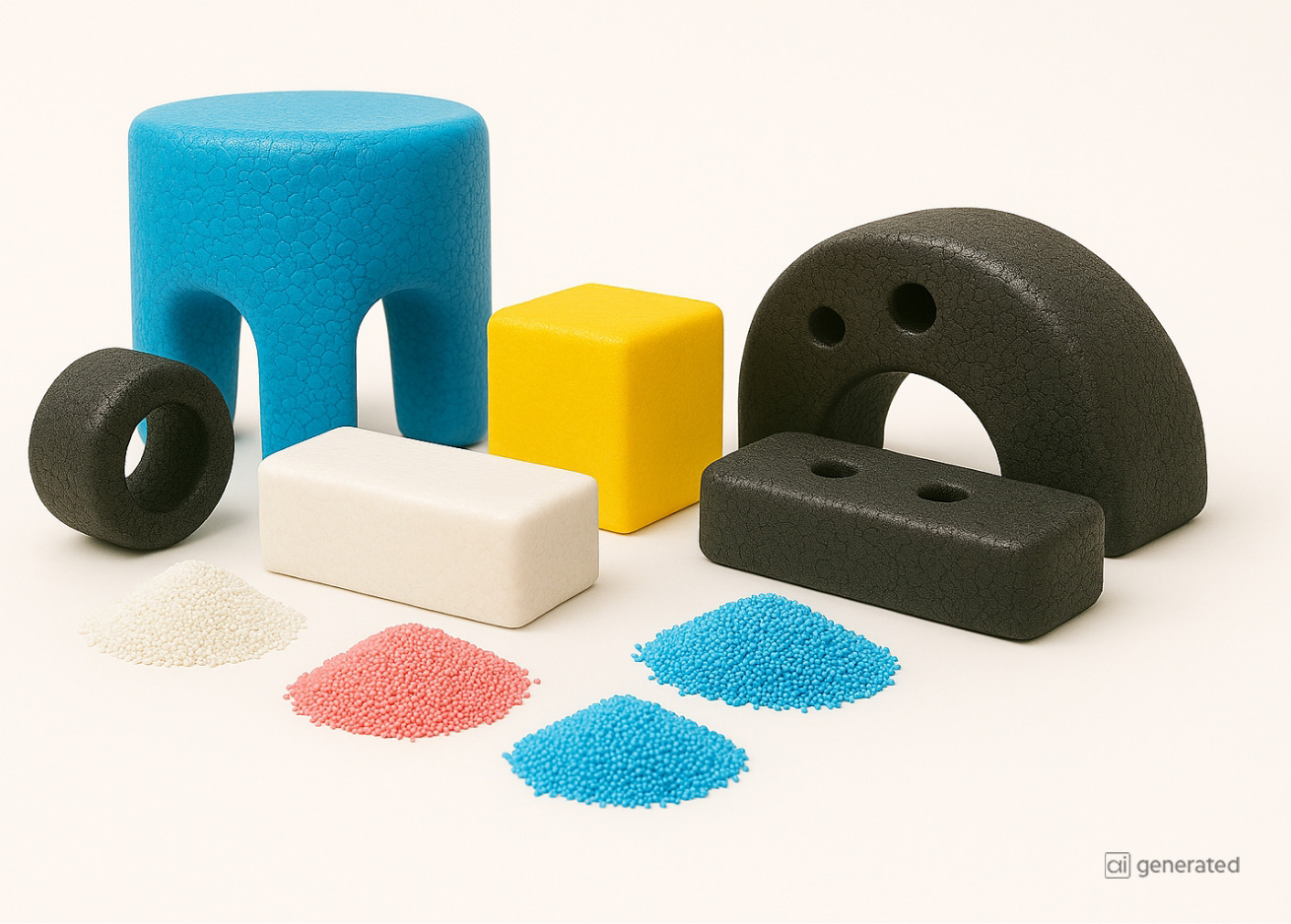
From technical components to design solutions—particle foams deliver performance and flexibility across countless sectors. Their properties make them a highly versatile material for innovative concepts.
You need to load content from reCAPTCHA to submit the form. Please note that doing so will share data with third-party providers.
More InformationYou are currently viewing a placeholder content from Turnstile. To access the actual content, click the button below. Please note that doing so will share data with third-party providers.
More Information